
×
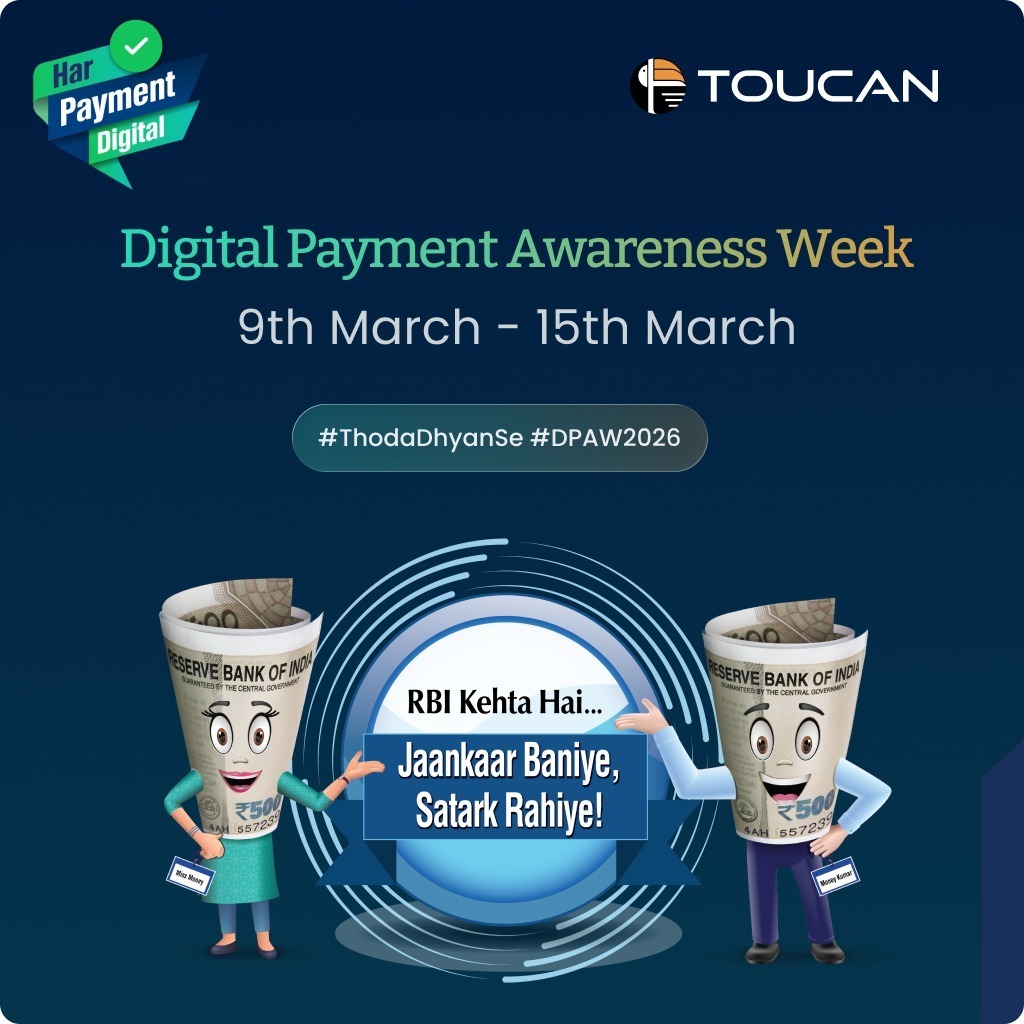
Empowering India, One Digital Payment at a Time! #IndiaPaysDigitally #HarPaymentDigital
Know more
Thoda Dhyan Se: Five Rules to Stay Ahead of Digital Payment Fraudsters
India processes 700 million UPI transactions every day. Fraudsters need you to slip up on just one.
Here’s a number that should make every Indian pause: ₹981 crore. That’s how much Indians lost to UPI fraud alone in FY2024–25, according to data tabled in the Lok Sabha. And that’s just the reported figure — a LocalCircles survey of 32,000 households found that 51% of fraud victims never even file a complaint.
This week — March 9 to 15 — the Reserve Bank of India observes its annual Digital Payments Awareness Week under its “Har Payment Digital” mission. The 2026 theme is pointed and personal: be alert to avoid frauds, with the tagline “thoda dhyan se.” Because in a country where UPI handles 84% of all retail payment volume, your alertness isn’t optional. It’s infrastructure.
As a regulated payment infrastructure company operating across 15 countries, we believe awareness is the most critical layer in any payment stack — more important than any technology we build.
The Fraud Landscape Has Changed — Have You?
Digital payment fraud used to mean someone tricking you into sharing your OTP. That still happens, but the landscape has shifted dramatically. Ministry of Home Affairs data reveals that investment and trading scams now account for 76% of all cybercrime financial losses — approximately ₹17,096 crore — where victims are lured through WhatsApp and Telegram groups into fake trading platforms showing fabricated profits.
Then there’s “digital arrest” — where criminals impersonate CBI officers or TRAI representatives over video calls, convincing victims they face imminent legal action. These cases surged from 40,000 in 2022 to over 1.23 lakh in 2024, with losses exploding 21-fold to nearly ₹1,935 crore. In one harrowing case, an elderly Delhi couple was held under “digital arrest” for 17 days and lost their entire savings of ₹14.85 crore. The Supreme Court has since ordered a nationwide CBI investigation.
Add fake KYC calls, QR code tampering, illegal loan apps, and phishing attacks (up 175% in H1 2024), and the total cybercrime damage in 2024 reached ₹22,845 crore across 22.68 lakh complaints.
The government is fighting back. The 1930 cybercrime helpline has saved over ₹5,489 crore through real-time fund freezing. NPCI shut down UPI’s collect request feature to curb scams. And the RBI’s new draft Fraud Protection Framework proposes that banks must compensate victims who report within five days. But no regulatory framework replaces the one thing that stops fraud before it starts: your awareness.
The “Thoda Dhyan Se” Framework: Five Rules That Protect Your Money
Think of these as your personal fraud firewall — five habits that take seconds but can save you lakhs.1.
1. Pause Before You Pay
Urgency is the fraudster’s greatest weapon. Whether it’s a “blocked account” alert or a “limited-time investment,” the script always demands immediate action. Legitimate institutions never pressure you to transact on the spot. Take 30 seconds. Breathe. Verify.
2. Verify the Source, Not the Story
Don’t evaluate the narrative; verify the source. Call your bank on the number printed on your debit card. Type the official URL yourself. Remember: no government agency conducts arrests over video calls.
3. Guard Your Credentials Like Cash
Your UPI PIN, OTP, and CVV are the keys to your money. No bank, app, or RBI representative will ever ask for them — over any channel. If someone asks, it’s a scam. Also use the Sanchar Saathi portal (sancharsaathi.gov.in) to check for SIM cards fraudulently issued in your name.
4. Scan QR Codes to Pay, Never to Receive
One of the most common UPI scams: a “buyer” sends a QR code claiming it’s for receiving money. It’s not. Scanning a QR code or approving a collect request always debits your account. You never need to enter your PIN to receive money.
5. Report Fast — The First Hour Matters Most
If you suspect fraud, call 1930 immediately and file a report at cybercrime.gov.in. Notify your bank simultaneously. The system can freeze fraudulent accounts in real time, but speed is critical — the RBI’s proposed framework specifically rewards reporting within five days.
The Bottom Line
India’s digital payment revolution is extraordinary. The IMF recognizes UPI as the world’s largest real-time payment system, handling nearly half of all global real-time transactions. That’s something every Indian can take pride in.
At Toucan Payments, we see this firsthand — processing billions in transactions across multiple markets, we know that trust is the real infrastructure behind every payment. And trust starts with awareness.
But scale brings exposure. The weakest link is rarely the technology — it’s the moment of human trust that gets exploited. The RBI’s message this week isn’t about fear. It’s about building a simple habit: thoda dhyan se. A little attention. A brief pause before you tap. A quick check before you trust.
Because the same system that lets you pay anyone, anywhere, in under two seconds — also means your money can disappear in the same time. The difference? Thoda dhyan se.