
×
Empowering India, One Digital Payment at a Time! #IndiaPaysDigitally #HarPaymentDigital
Know more
Multi- PSP strategy: Why modern merchants need redundancy in payment processing
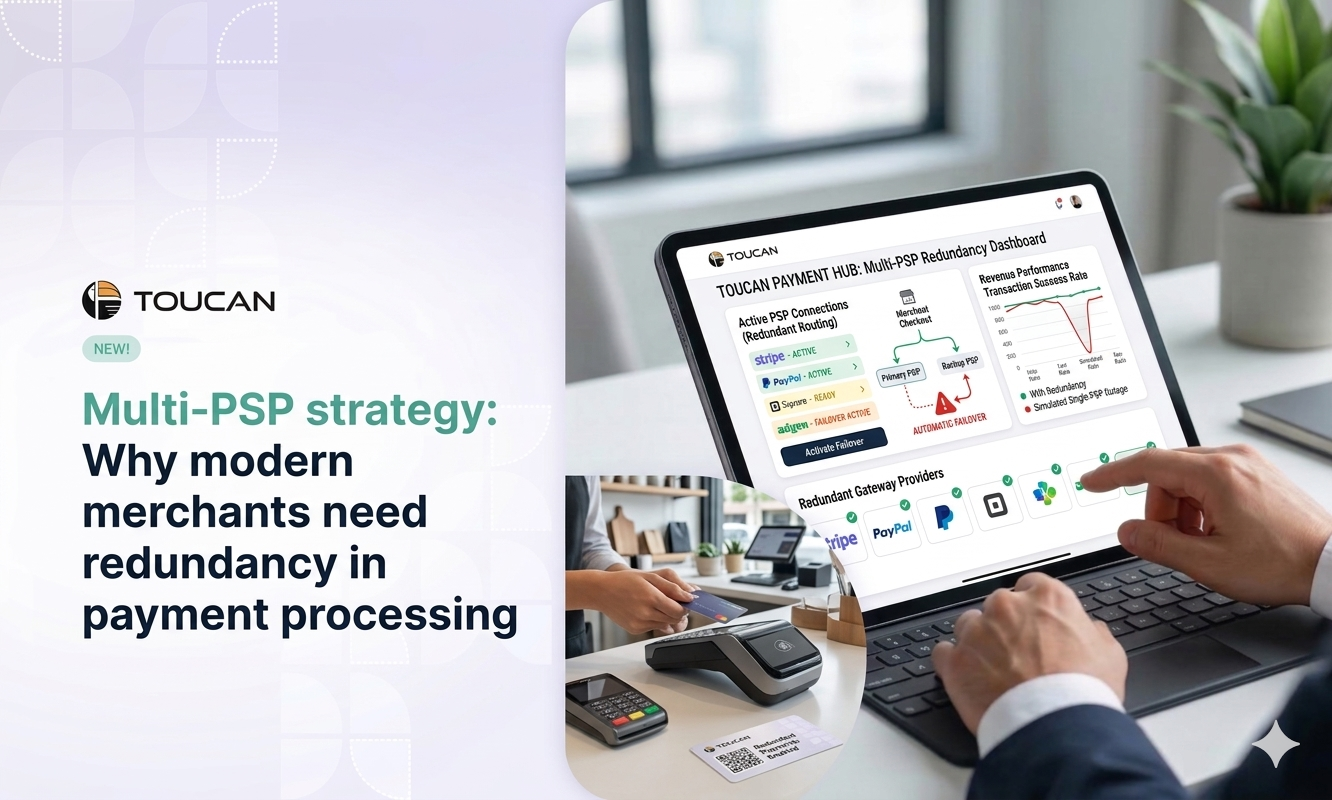
In 2026, the global payments landscape is more fragmented, and more competitive, than it has ever been. Consumers expect seamless checkout experiences across borders, currencies, and devices. Regional payment methods like UPI, TARGET, PIX etc are growing faster than any single PSP can support.
For merchants navigating this complexity, a multi-PSP payment strategy is the foundation of a resilient, cost-efficient, and scalable payment stack.
Why single-PSP is a hidden liability
When all your volume runs through one PSP or acquirer, your entire checkout experience inherits their outages, risk appetite, and roadmap. For growth-stage and enterprise merchants, even a brief outage or a spike in false declines can translate into lakhs in lost revenue and long-term churn.
- PSPs do go down: major processors have reported multiple hours of downtime per quarter, directly impacting sales and customer experience.
- Risk and compliance changes upstream can suddenly tighten authorization, especially in regulated markets like India, travel, gaming, and subscriptions.
- Vendor lock-in into their fees, risk rules, and geographic coverage, with limited leverage to negotiate or expand.
In other words, a single PSP turns your payments into a single point of failure-commercially, technically, and operationally.
What is a multi-PSP strategy?
It is an intentional architecture where you connect to multiple PSPs, acquirers, and local payment methods behind a unified control layer. That control layer decides, in real time, where each transaction should go to maximize success, minimize cost, and preserve a consistent customer journey.
Key building blocks:
- Multiple PSPs and acquirers across regions (cards, UPI, net-banking, BNPL, wallets, APMs).
- Intelligent routing rules based on issuer, BIN, geography, channel, risk profile, and performance data.
- Cascading and retries on soft declines, with automated failover when a PSP or acquirer is unavailable.
- One orchestration or extension layer to abstract integrations, tokens, and reporting.
How Toucan’s SuperStream powers a modern multi-PSP strategy
Toucan’s SuperStream payment orchestration platform is built precisely for merchants who want the benefits of a multi-PSP strategy: redundancy, optimization, and coverage, without the integration and operational burden. It sits as a unified control layer between your front-end experiences and a broad network of PSPs, acquirers, and payment methods.
With SuperStream, modern merchants can:
- Connect once, access many: integrate a single, modular API via ToucanOS, and gain connectivity to 50+ processors and 200+ payment methods globally.
- Implement intelligent routing and cascading out of the box, tuned for your geographies, risk profile, and business priorities.
- Add new PSPs or methods with configuration and extensions rather than fresh builds, letting your teams focus on growth.
The Bottom Line: Redundancy Is Revenue Protection
In 2026, payment infrastructure is no longer a back-office function. It’s a competitive advantage. Merchants who build multi-PSP strategies with intelligent orchestration don’t just protect themselves from outages. They actively improve approval rates, lower processing costs, expand into new markets faster, and deliver better checkout experiences for their customers.
Ready to Build Payment Redundancy?
Learn how SuperStream can help you implement a multi-PSP strategy tailored to your business. Visit toucanus.com or contact our team today.
Frequently Asked Questions
Q1: What is a multi-PSP strategy?
A: A multi-PSP strategy means working with more than one payment service provider or acquirer, managed through a unified layer, instead of routing all transactions through a single gateway.
Q2: Isn’t a single “all-in-one” payment gateway enough?
A: A single gateway can work at early stages, but it becomes a bottleneck as you scale across regions, methods, and customer profiles.
Q3: Won’t managing multiple PSPs make my stack more complex?
A: If you integrate PSPs point-to-point, yes, complexity explodes. If you use a payment orchestration layer (like Toucan’s SuperStream), you get a single integration, centralized routing logic, unified reporting.
Q4: Do I need a dedicated payments team to run a multi-PSP strategy?
A: An orchestration platform gives product, growth, and finance teams a no-code or low-code way to adjust routing rules, add providers, and monitor performance without constant engineering intervention.